Cold Radiators, Noisy Boiler,Sludged System? Powerflushingin Stockport and Greater Manchester.
Years of black magnetite sludge pumped out of your radiators and pipework, the system dosed and protected, so the heat you are already paying for actually reaches the rooms you live in.
- 5.0 ★
- Google (67+)
- #9663
- Gas Safe reg.
- 1986
- Established
- 500+
- On contract
Book powerflushing
Powerflushing, done properly.
Every sealed central heating system slowly makes its own sludge. Water, steel radiators and a little oxygen produce magnetite: a fine black iron oxide that settles in radiator bottoms, chokes pipework and eventually finds its way into the boiler's heat exchanger. Swainson Gas Services has been flushing and protecting heating systems across Stockport and the surrounding areas since 1986, and it is one of the few jobs where the results are visible in the first evening.
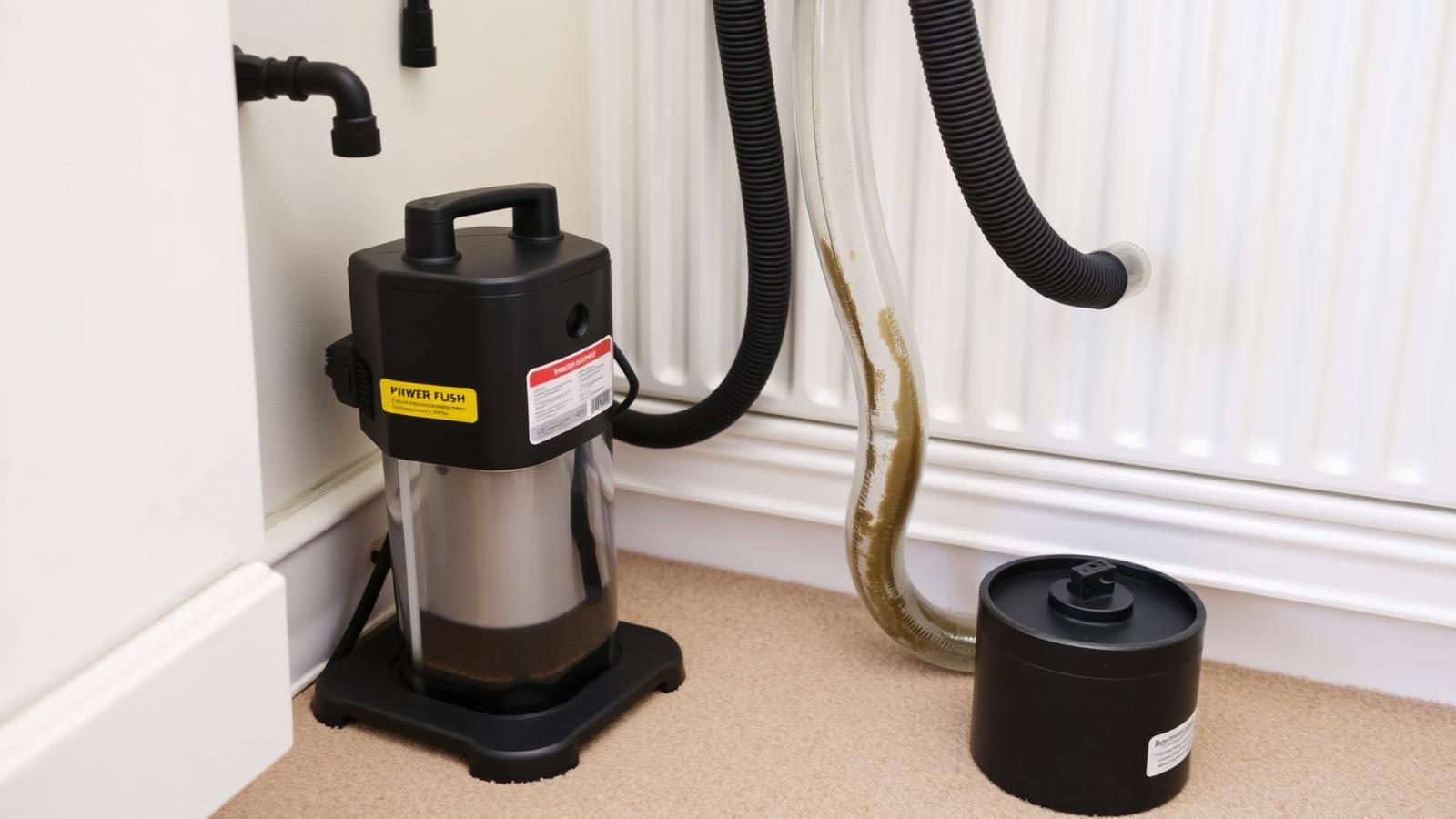
A powerflush connects a high-flow, low-pressure pump to your system and drives cleaning chemicals through every radiator and every pipe run in both directions, breaking sludge loose and dragging it out to waste. Each radiator is treated individually, the boiler is flushed, the system is refilled clean, dosed with corrosion inhibitor, and a magnetic filter is fitted or checked so the sludge does not simply come back.
Households with radiators cold at the bottom and warm at the top, upstairs rooms that never get hot, a boiler that bangs, kettles or cuts out on overheat, black water when a radiator is bled, or a system that has never been cleaned in fifteen years. It is also standard practice before fitting a new boiler onto existing pipework.
When symptoms appear, and always before a new boiler goes onto an old system. Well-maintained systems with inhibitor and a filter can go many years without needing one. Systems that have been topped up repeatedly, or have had an unprotected refill after a repair, tend to need attention far sooner.
Sludge does not just cause cold spots, it costs money continuously. A choked system makes the boiler run longer to get the same room temperature, wears the pump, and coats the heat exchanger, which is the most expensive single component in the appliance. A flush is a fraction of the cost of the failures it prevents.
The cost of putting it off.
Sludge builds up quietly over years, and by the time it is obvious it has usually already cost you in gas and in wear.
Cold spots and dead radiators
Sludge settles in the bottom of radiators, so the top is hot and the bottom is cold. Whole radiators, usually the furthest from the boiler, stop pulling their weight.
Higher gas bills
A choked system needs longer run times for the same warmth. You pay for heat that is stuck in the pipework rather than in the room.
Pump and valve failure
Circulating grit wears pump bearings and jams thermostatic radiator valves and diverter valves. Both are common, avoidable repair bills.
Heat exchanger damage
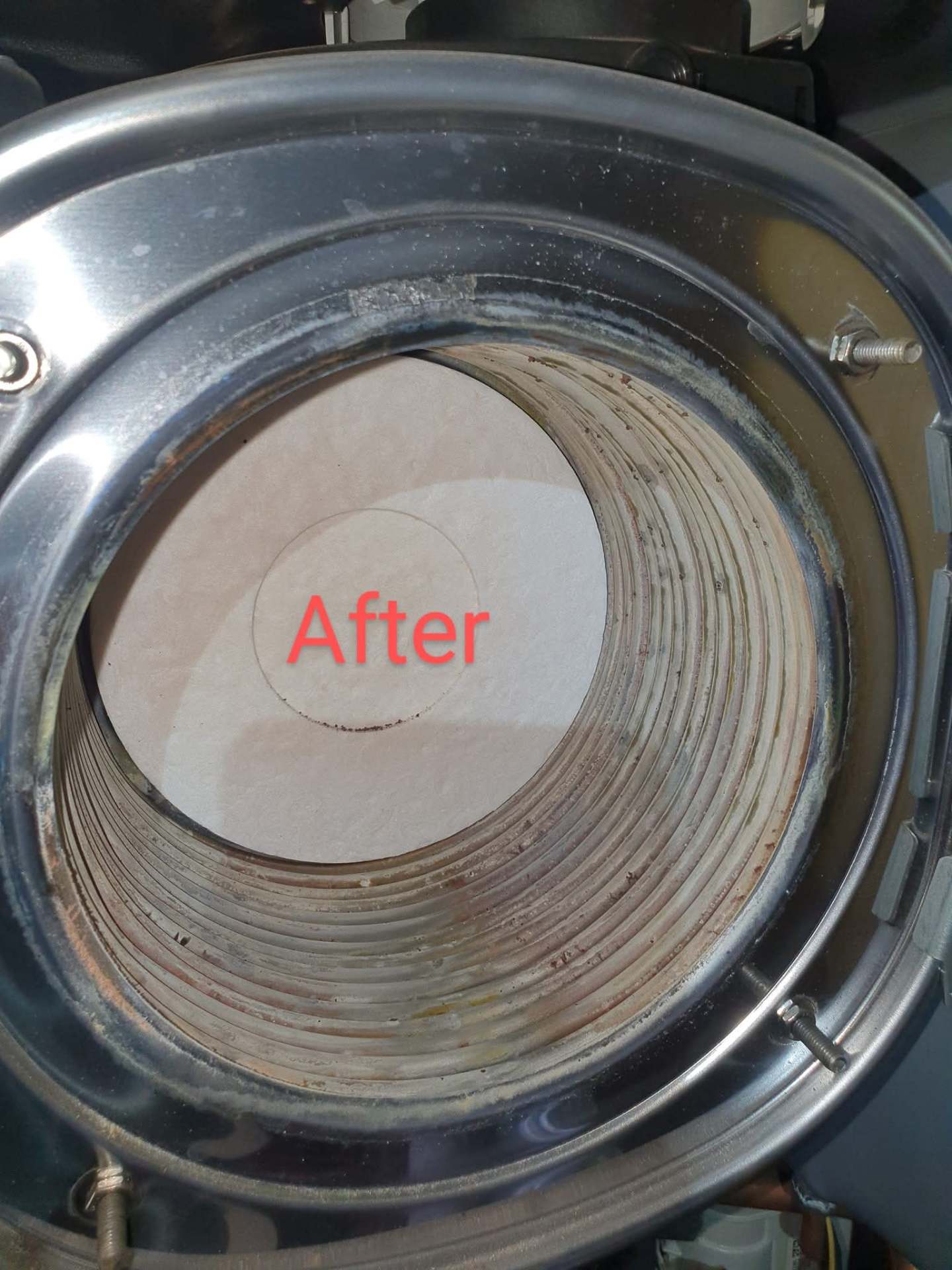
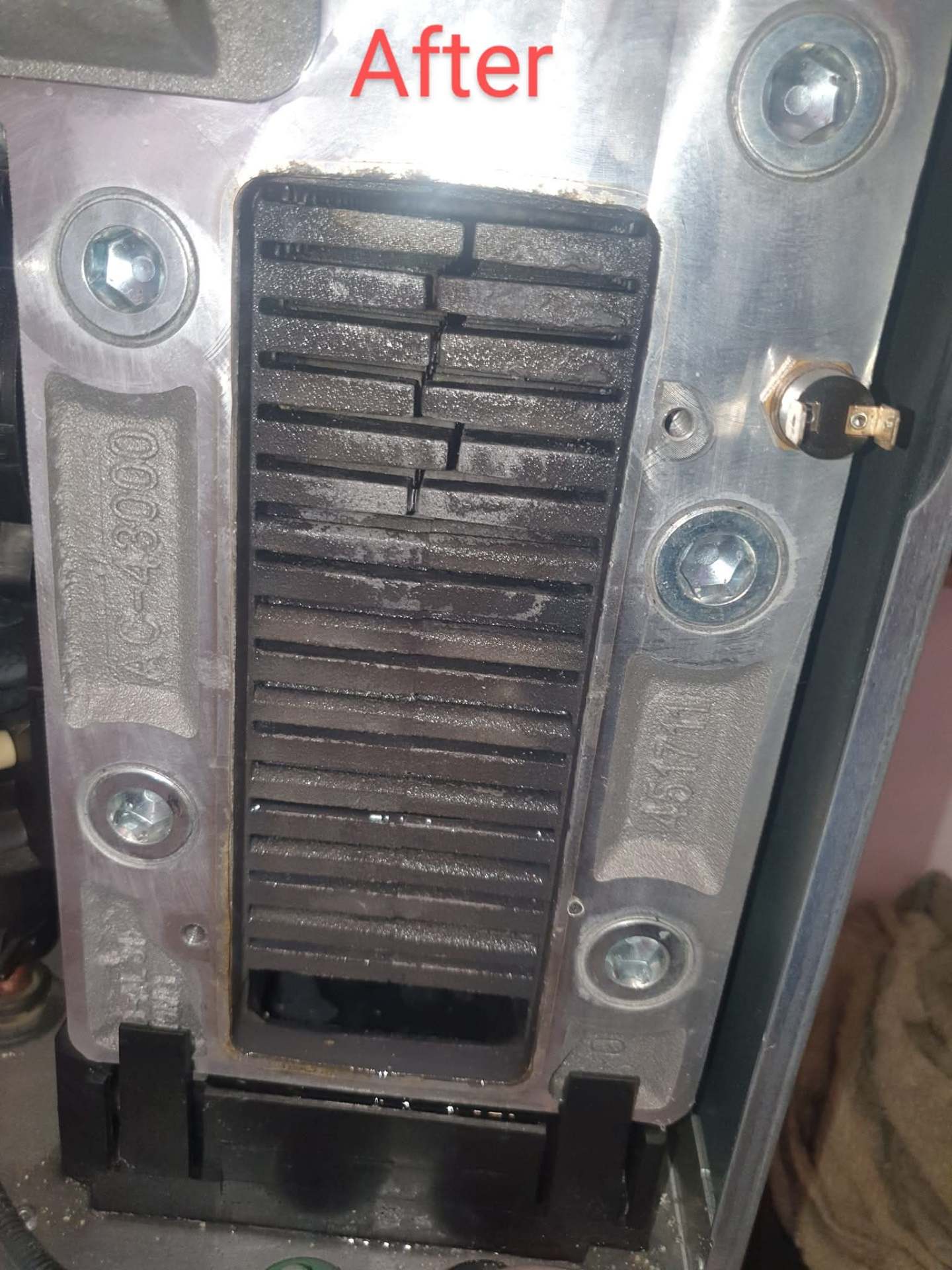
Once magnetite reaches the boiler's heat exchanger it restricts flow, causes kettling and overheat lockouts, and can write off the most expensive part of the boiler.
- Bleeding radiators over and over and topping the system up with fresh oxygenated water, which makes more sludge, not less.
- Fitting a new boiler onto a dirty system without a flush, then losing the warranty claim when the heat exchanger blocks.
- Skipping the inhibitor after a repair or a drain-down, which restarts the whole corrosion cycle from zero.
A clear five-step system.
No guessing, no meter-running. Every job follows the same repeatable process, that's how the result stays consistent.
-
01
Diagnose first
We check radiator temperatures, flow and return, pump operation and system water condition. If a flush is not the right answer, we say so before taking any money.
-
02
Connect and pre-treat
Flushing pump connected at the most effective point, sludge remover circulated through the full system to break deposits loose.
-
03
Radiator by radiator
Each radiator isolated and flushed in both directions, with agitation where needed, so the deposits in the bottom actually leave the property.
-
04
Flush to clear
The system is flushed through until the water runs clear, then neutralised and refilled.
-
05
Protect and prove
Corrosion inhibitor dosed, magnetic filter fitted or cleaned, radiators balanced, and the temperature improvement shown to you before we leave. 12-month workmanship guarantee.
What you actually get.
Warm radiators, top to bottom
The most immediate and visible result. Rooms that took hours to warm up come up to temperature normally again.
Lower running costs
A clean system moves heat efficiently, so the boiler runs less to reach the same thermostat setting.
Quieter boiler
Kettling, banging and overheat lockouts caused by restricted flow usually disappear with the sludge that caused them.
Longer boiler life
Protecting the heat exchanger and pump is the whole point. Both are far more expensive than the flush.
Protection that lasts
Inhibitor and a magnetic filter mean the sludge does not simply build straight back up.
Honest assessment
If your problem is a stuck valve, an airlock or a failed pump rather than sludge, we will fix that instead.
The detail that matters.
Not every cold radiator needs a powerflush, and not every system can take one. This is how we decide, and what the alternatives are.
Powerflush or chemical flush?
A chemical (or cleanse) flush circulates cleaner using the system's own pump and is suitable for lightly contaminated systems, often as part of a boiler installation. A powerflush uses a dedicated high-flow pump, treats each radiator individually and reverses flow direction, which is what shifts heavy, settled magnetite. We recommend the lighter option whenever it will genuinely do the job.
Older systems and microbore
Some very old systems, corroded steel pipework or heavily pinholed radiators are not good flush candidates, because the flush can expose leaks that were being held shut by the sludge itself. Microbore pipework needs a careful approach for the same reason. We assess the system's condition and tell you honestly before starting rather than after.
Why filters matter
A magnetic filter catches circulating magnetite before it reaches the boiler, and it is the single cheapest piece of protection you can fit. Fitting one at the end of a flush, and cleaning it at every annual service, is what keeps a flushed system clean for years rather than months.
Before a new boiler
Every manufacturer requires the system to be cleaned and inhibited when a new boiler is fitted to existing pipework. Skipping it is the most common reason a warranty claim on a blocked heat exchanger is refused. We include a cleanse on every installation, and recommend a full powerflush where the system warrants it.
How long it takes
A typical Stockport semi with eight to ten radiators takes most of a working day. Larger properties, or systems with very heavy contamination, can take longer, and we would rather take the time than leave half the sludge behind.
Questions we hear every week.
If you have a question that isn't answered here, ring John directly on 07442 536165.
Often booked together.
Related reading: why dirty heat exchangers cause boiler breakdowns, with before-and-after photos from our own jobs.
Areas we cover for powerflushing
- Powerflushing in Hazel Grove
- Powerflushing in Stockport
- Powerflushing in Poynton
- Powerflushing in Bramhall
- Powerflushing in Cheadle Hulme
- Powerflushing in Marple
- Powerflushing in High Lane
- Powerflushing in Sale
- Powerflushing in Didsbury
- Powerflushing in Offerton
- Powerflushing in Woodley
- Powerflushing in Bredbury
- Powerflushing in Romiley
- Powerflushing in Davenport
- Powerflushing in Heaviley
- Powerflushing in Gatley
- Powerflushing in Cheadle
- Powerflushing in Disley
- Powerflushing in Handforth
- Powerflushing in The Heatons
Cold radiators and a noisy boiler? Get the sludge out.
Full powerflush, inhibitor dosed, magnetic filter fitted, 12-month workmanship guarantee.